

High-Performance Computing
The High-Performance Computing (HPC) research area asks what is the fastest and most energy-efficient way to solve a computational problem, and how to design and implement software and hardware systems to attain these limits.
HPC methods and systems are necessary when a calculation, like a physics simulation or training an AI model, is too large or too slow to solve on a single general-purpose desktop or server system, thereby motivating the use of a network of machines (i.e., a computer cluster or supercomputer) or some other specialized processing system (e.g., a neuromorphic or quantum processor). At Georgia Tech, researchers from across campus are investigating all aspects of an HPC system, including processors, memory, storage, networking, programming systems, algorithms, and applications.
Many complex phenomena in science and engineering—including weather prediction, drug design, materials discovery, improving vehicle aerodynamics, and training large-language models for AI, to name just a few—are too difficult to analyze, simulate, or otherwise deploy on a “conventional” everyday computer, such as your laptop or desktop. That’s where HPC hardware and software come into play, by exploiting more and faster hardware with specialized algorithms and software.
Innovation Through Expertise

IDEaS serves as a critical bridge between multiple organizations on campus that intersect with HPC, including all the major colleges, the Georgia Tech Research Institute (GTRI), and the Partnership for an Advanced Computing Enviroment (PACE), which maintains the HPC “Big Iron” infrastructure on campus. It is also actively engaging and collaborating with several research institutes and centers on campus, including the Center for Research on Novel Computing Hierarchies (CRNCH) on post Moore’s Law computing hardware, the Center for Scientific Software Engineering (CSSE) for software, and myriad others. Members of IDEaS provide informal mentorship and guidance to student organizations and courses on campus, including Supercomputing@GT (the student HPC club) and the Team Phoenix VIP. Notably, IDEaS also organizes Georgia Tech’s presence at the major HPC conference, “Supercomputing” (ACM/IEEE International Conference on High-Performance Computing, Networking, Storage, and Analysis), which regularly draws over 10,000 attendees annually.
Affiliated Research Centers
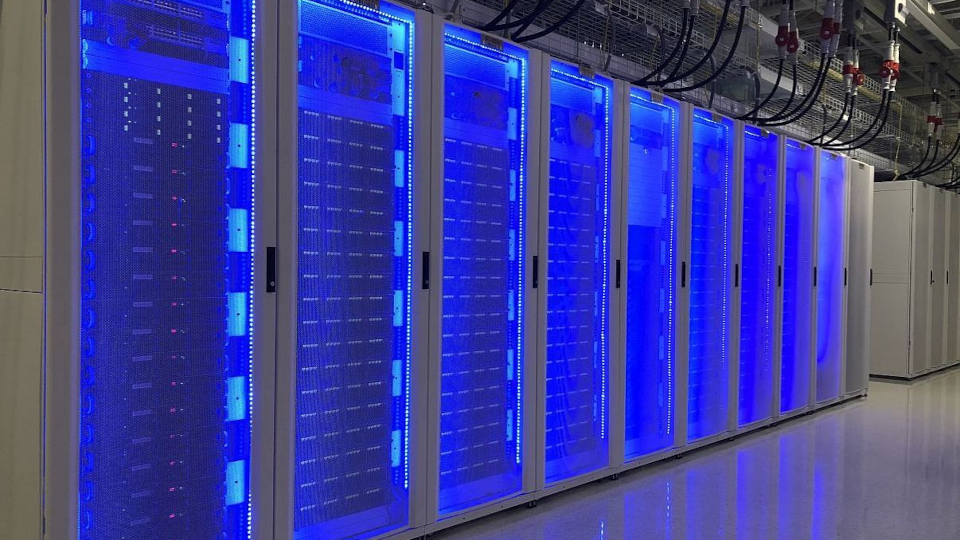
Partnership for an Advanced Computing Enviroment (PACE)
The Partnership for an Advanced Computing Environment (PACE) provides faculty participants a sustainable leading-edge high performance computing (HPC) infrastructure with technical support services. This frees faculty to focus on research while reducing their direct costs for HPC equipment and increasing productivity of students and postdocs. PACE is a partnership between Georgia Tech faculty and the Office of Information Technology focused on HPC. Strong support from Georgia Tech’s senior leadership enables PACE to provide infrastructure, software, and dedicated technical services for participating researchers, allowing them to focus their HPC investments primarily on compute nodes and expanded storage. In addition, all GT faculty can request access to the FoRCE Research Computing Environment which is a shared cluster that includes nodes, GPU’s, and high speed scratch storage.

Center for Research on Novel Computing Hierarchies (CRNCH)
As the demand for high-performance computing grows, our ability to speed up computers by creating faster and faster transistors is reaching the end of the road. How can we rethink—even “reboot”—computing technology to restart the historic exponential performance growth we’ve experienced over the past five decades? This is the premise underlying the Center for Research into Novel Computing Hierarchies (CRNCH), an Interdisciplinary Research Center at Georgia Tech. Our researchers are poised on the forefront of the next computing revolution, investigating promising new methods while teaming with industry, academic, and government partners to take advantage of the new knowledge our research is revealing
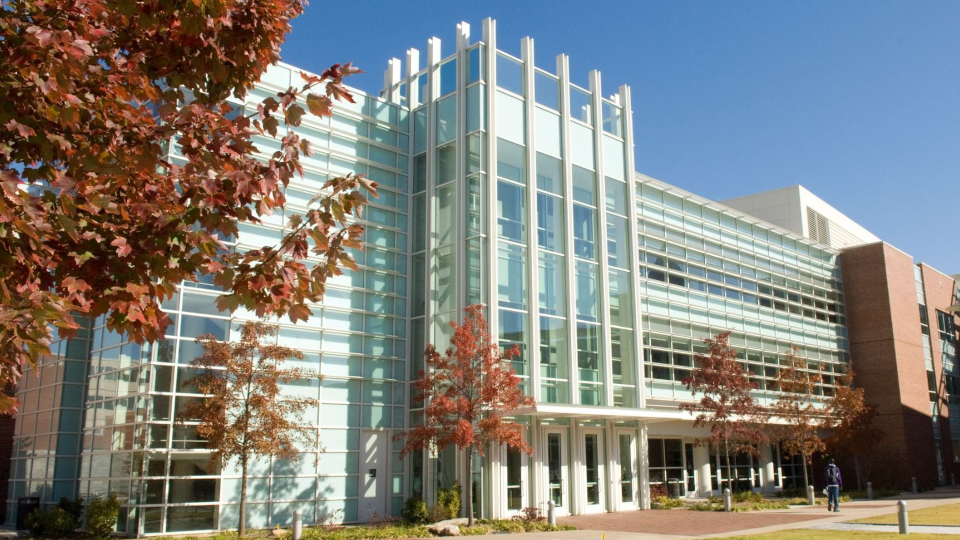
Center for Scientific Software Engineering
The Center for Scientific Software Engineering (CSSE), established in late 2021, is one of four centers under Schmidt Sciences’ Virtual Institute for Scientific Software. The other centers are located at Johns Hopkins University, the University of Cambridge, and the University of Washington. CSSE’s mission is to advance and support scientific research by applying modern software engineering practices, cutting-edge technologies, and modern tools to the development of scientific software both within and outside Georgia Tech.
Learn More
Contact for High Performance Computing | Rich Vuduc (richie@cc.gatech.edu) and Jeffrey Young, Co-Directors of the Center for Scientific Software Engineering